Al Abbas Building 2, Bur Dubai, UAE Mon - Fri: 9.00 am - 6.00 pm
info@hfmgconsulting.com +971 508698220
Process Optimisation Services

Improve Efficiency, Reduce Costs & Strengthen Performance

Process optimisation services to review, redesign, and improve business processes for increased efficiency, reduced costs, and enhanced operational performance.
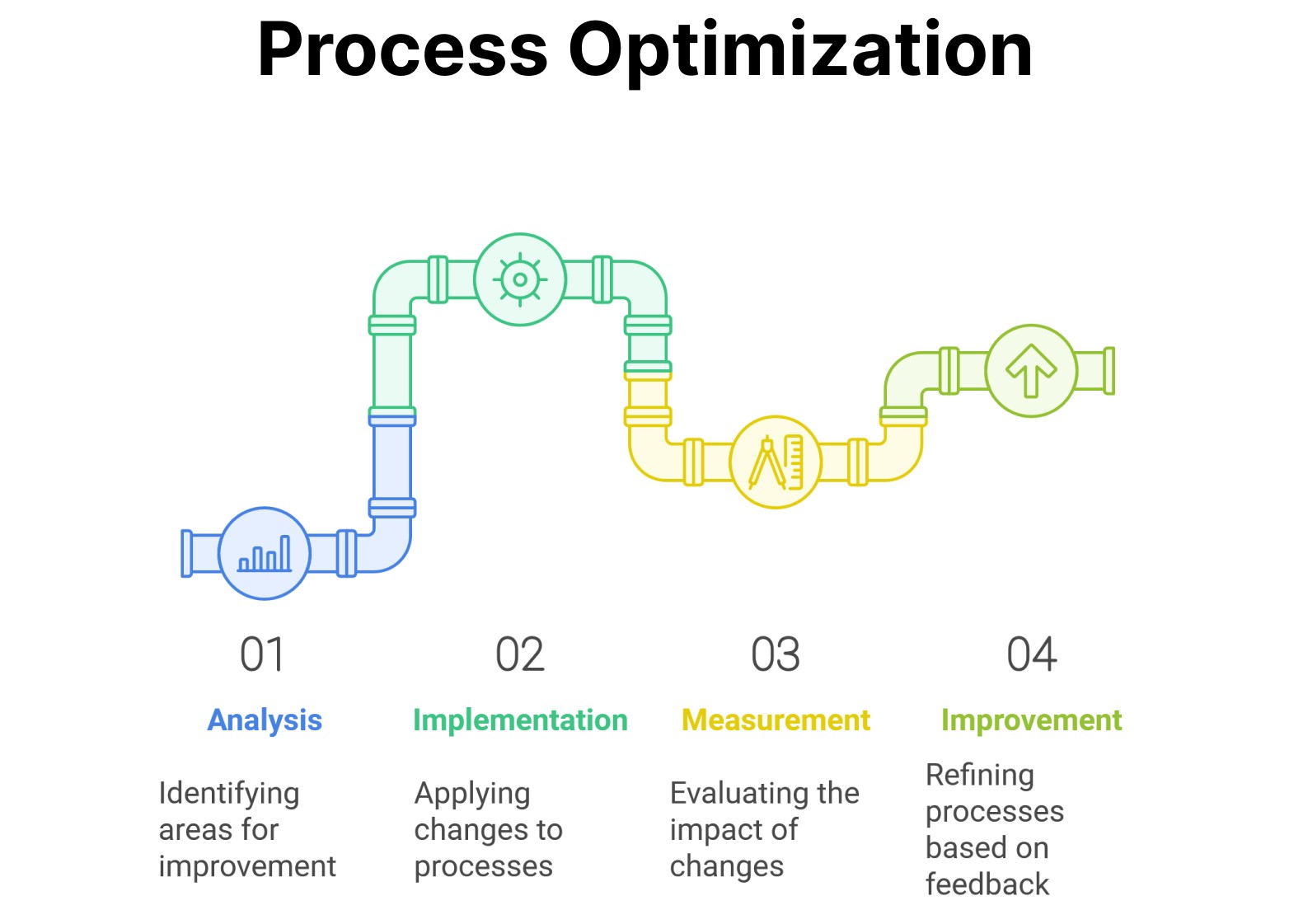
Workflow Optimisation

Streamlined operations and process improvement

Why It Matters

Why Process Optimisation Matters

Inefficient processes increase costs, delay decision-making, and expose businesses to operational and compliance risks. As businesses grow, processes must evolve to support scale and complexity. Professional process optimisation helps you streamline operations, eliminate inefficiencies, and improve control.

  • Improve operational efficiency
  • Reduce unnecessary costs and delays
  • Strengthen internal controls
  • Enhance consistency and accuracy
  • Improve employee productivity
  • Support scalability and growth
Optimised Workflows

Efficient process design and control implementation

Our Approach

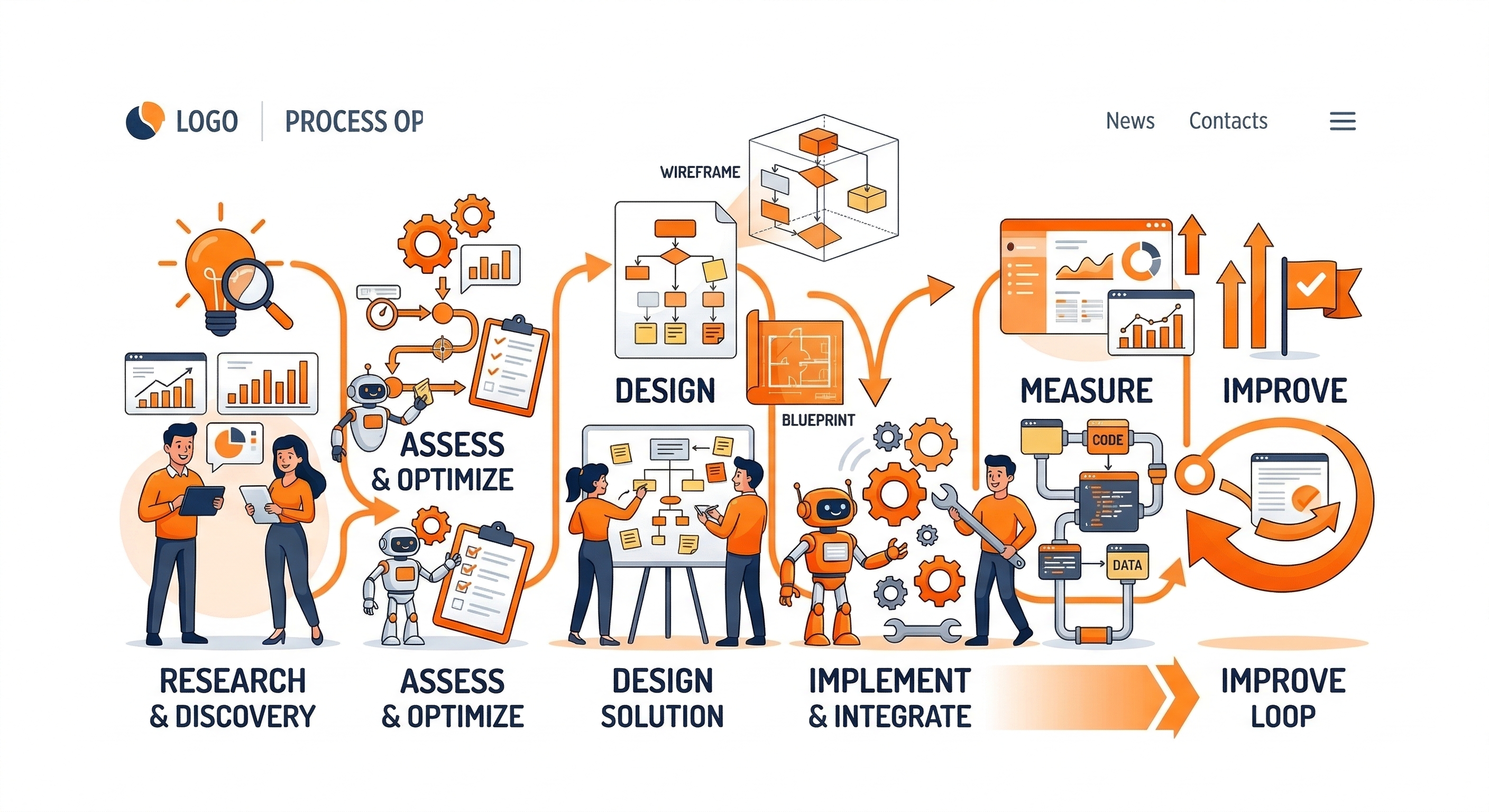
Our Process Optimisation Approach

Systematic review and improvement of business processes

01
Process Review & Mapping

Document and understand current workflows across key business functions.

02
Gap & Bottleneck Identification

Identify inefficiencies, duplication, delays, and control weaknesses.

03
Redesign & Improvement Planning

Develop streamlined, practical process improvements aligned with business needs.

04
Control & Risk Alignment

Ensure optimised processes include appropriate controls and risk mitigation measures.

05
Implementation Support & Monitoring

Support implementation and monitor effectiveness of improved processes.

Benefits

Benefits of Process Optimisation

Transform your operations with streamlined, efficient workflows

Increased Operational Efficiency

Streamline workflows to eliminate waste and improve productivity across all operations.

Reduced Costs & Processing Time

Cut unnecessary expenses and accelerate task completion through optimised processes.

Improved Accuracy & Consistency

Enhance quality and reliability of outputs with standardised, well-designed processes.

Stronger Internal Controls

Build robust control frameworks directly into your business processes for better governance.

Enhanced Employee Productivity

Free your team from manual tasks to focus on higher-value strategic activities.

Scalable Processes for Growth

Design processes that can scale with your business for sustainable long-term growth.

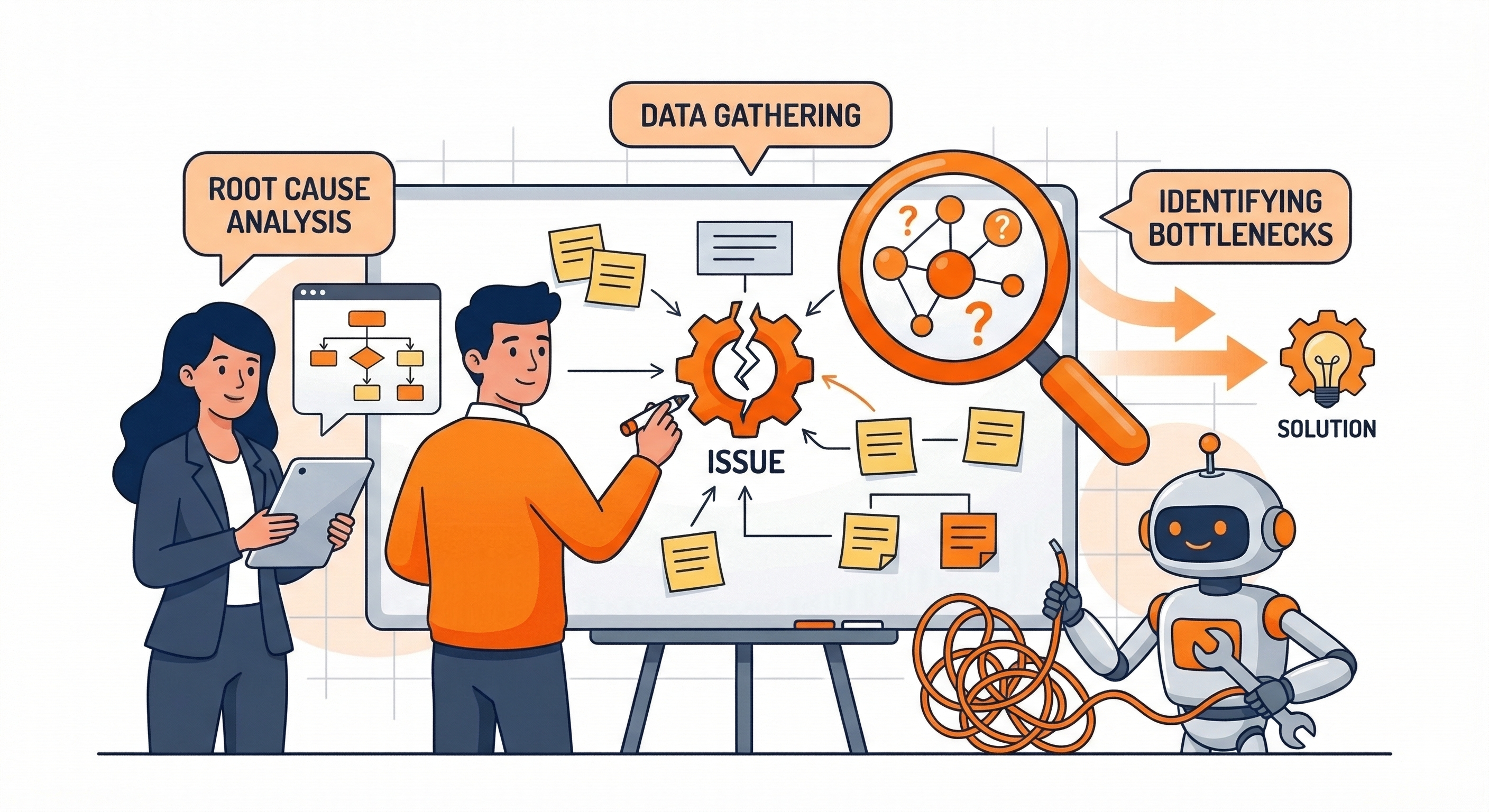
Problem Analysis

Identifying and resolving operational bottlenecks

Problems We Solve

Problems We Help Solve

Our process optimisation services address the most common operational challenges businesses face:

  • Inefficient or outdated workflows
  • Manual processes causing errors and delays
  • Lack of process clarity or ownership
  • Weak internal controls
  • Rising operational costs
  • Difficulty scaling operations
Frequently Asked Questions

Everything you need to know about process optimisation

FAQ

Common Questions About Process Optimisation

Process optimisation is the improvement of business workflows to enhance efficiency, reduce costs, and strengthen controls. It involves systematically reviewing, redesigning, and improving processes to ensure they operate efficiently, effectively, and consistently.

Any operational, financial, or compliance-related process can be reviewed and improved based on business needs. This includes finance and accounting processes, procure-to-pay and order-to-cash cycles, budgeting and reporting workflows, compliance and approval processes, internal control procedures, and cross-departmental handoffs.

Yes. Optimised processes benefit businesses of all sizes by improving efficiency and reducing errors. Small businesses especially benefit from establishing efficient processes early, which helps them scale operations smoothly as they grow.

Optimisation focuses on improving the process itself, while automation applies technology to support efficient processes. Optimisation ensures the process is well-designed and efficient before automation is considered, preventing the risk of automating inefficient workflows.

Yes. Well-designed processes improve control effectiveness and regulatory compliance. By building controls directly into optimised processes, businesses ensure consistent compliance while maintaining operational efficiency and reducing the risk of errors or fraud.

Ready to Optimise Your Operations?

Work smarter. Reduce inefficiencies. Strengthen performance. Professional process optimisation helps you streamline operations, cut costs, and improve controls for sustainable growth.